Relationship Terms and Conditions
Jason Jones, SaveNeighbor Founder
CHOICE
There's a good reason marketplaces try to prohibit off-platform connections; whether delivery, rideshare, tasker, or bed & breakfast. They each have a section of their terms that reads something like –"Moving future bookings off-platform can result in suspension of your account", or "Users are contractually barred from soliciting customers for off-platform transactions". Some monitor communications through their software, and some automatically block certain words and phrases.
All in the interest of protecting their most valuable asset. No, not their drivers or their merchants; not their listings, not even their customers. What they're protecting is control over the relationships.
Without that control, marketplace companies couldn't unilaterally extract fees and commissions. They couldn't impose lockouts and minimum acceptance rates.
But with that control, they can end the relationship after every transaction. Because they're in the business of lead generation, they need to separate sellers and buyers as often as they bring them together.
It's not all bad. The apps create low barrier opportunities for a lot of people. They bring discovery to small businesses and local service providers. I believe they have, and will continue to have their place in the economy. But the model requires the platform to protect the profitability of its position.
If customer tips are large enough, they limit the base pay. If government creates regulation, they reduce contractor counts to compensate. If the data shows a food item is popular in a certain location, they open ghost kitchens that compete with user restaurants.
At best we'd call it shrewd, at worst predatory. But for sure outdated.
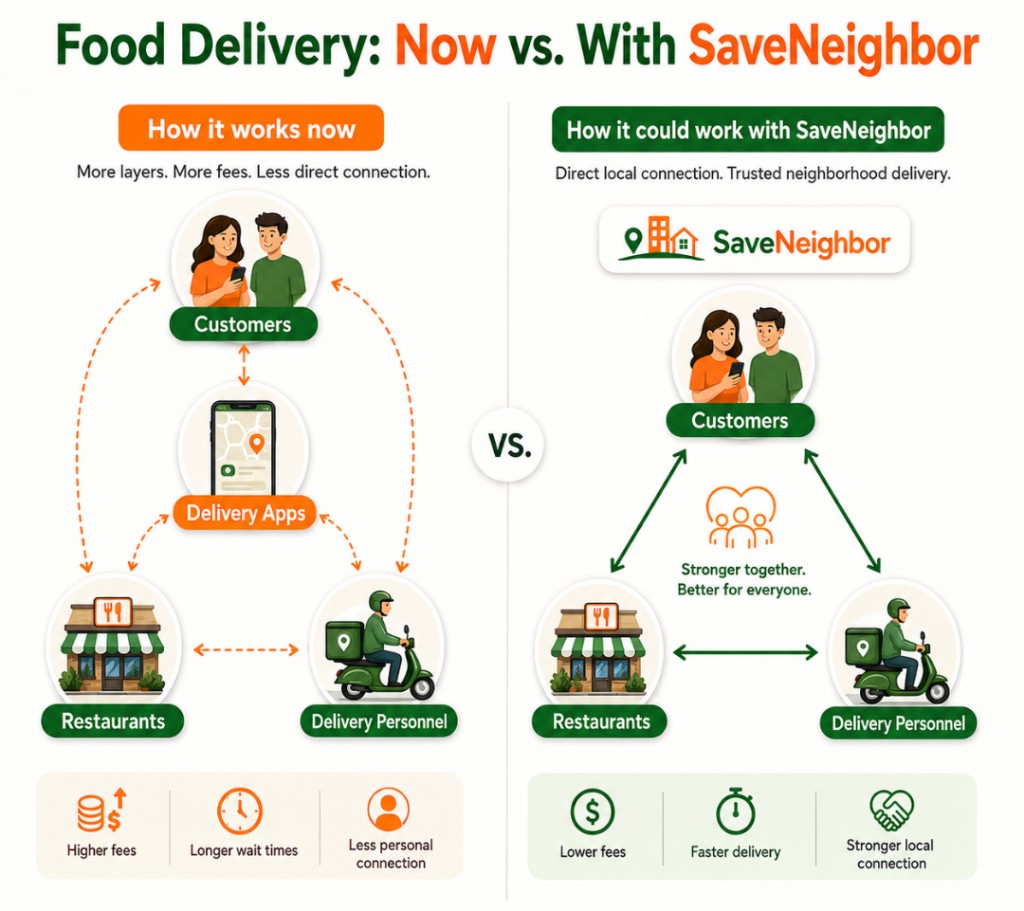
Across these platforms, users have come up with their own ways to disintermediate and continue working with each other after the initial introduction . They do it because the value of an ongoing customer relationship is obvious, and enticing enough to risk violating terms of service.
Those workarounds reveal an unmet need in the gig economy, and validate SaveNeighbors direct request model.
The relationships that third-party apps temporarily create with each transaction can exist permanently and provide compounding value. Customers can keep the drivers and taskers they trust. Workers can build repeat clients. Restaurants and merchants can build their own delivery networks instead of renting access one order at a time.
People should be able to take advantage of the trust they've built–and use it to improve the quality of the help they receive, and the work they provide.
I think they can, and will.