Errands and everyday help
Life has small errands.
Trust shouldn't be outsourced to a stranger.
SaveNeighbor helps people organize errands, pickups, drop-offs, household help, and local assistance through trusted personal networks—not random marketplace assignment.
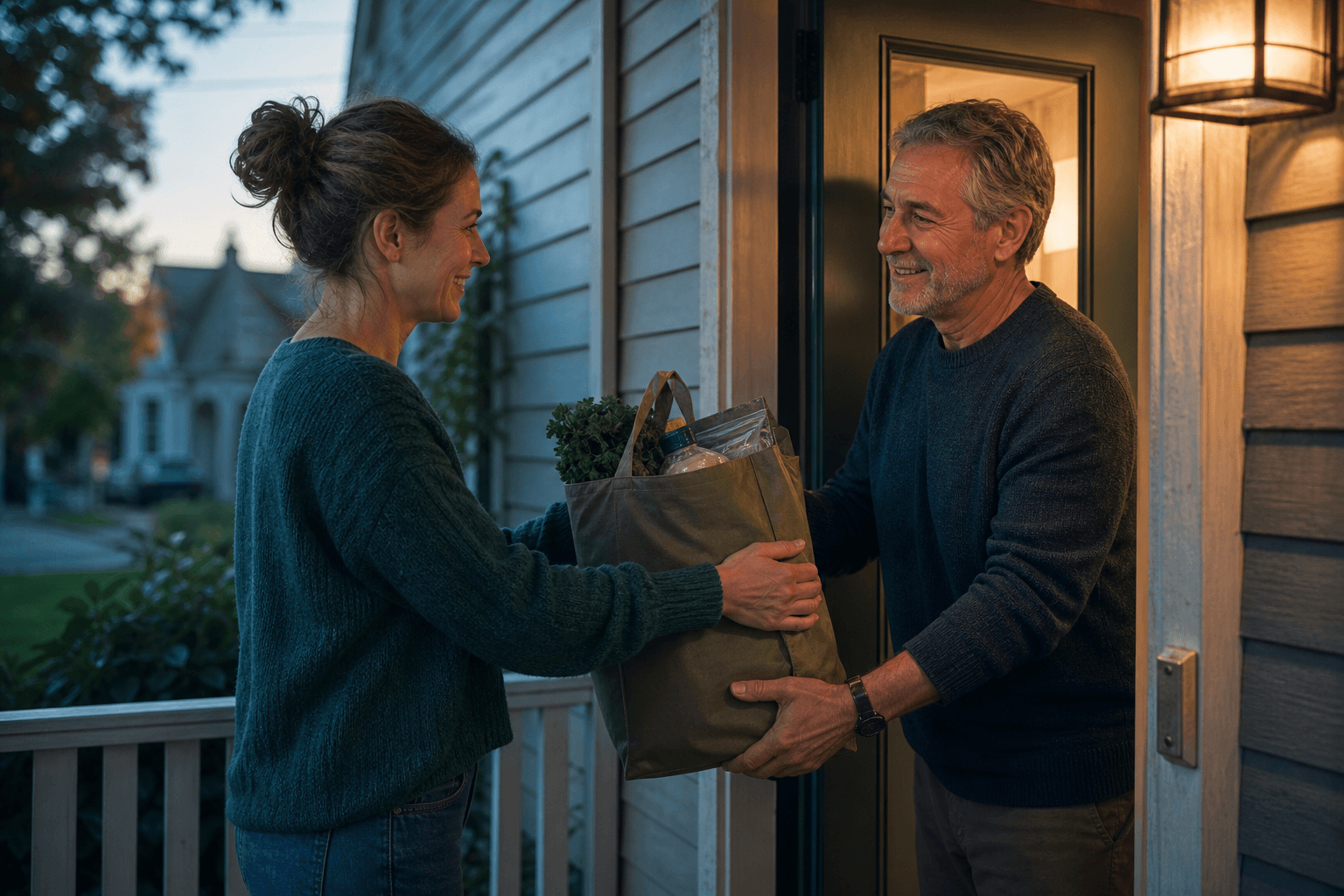
Most small needs do not fit neatly into delivery apps or service marketplaces. The issue is not just convenience. It's trust.
Practical help is everywhere. Random assignment is not the only way to get it.
People need help with practical things: post office drop-offs, store runs for a single item, car rides, pharmacy pickups, home tasks, caregiving help, and time-sensitive errands that do not belong in a food-delivery app.
Service marketplaces solve search and matching. They send you a stranger for every task, and only the platform has a relationship with either of you. That works for some jobs. But it's a poor fit when the task is personal, recurring, or simply easier with someone nearby who already knows you.
Everyday help is all around you. SaveNeighbor helps people organize it through relationships, familiarity, and personal networks—not another anonymous queue.
What people ask for
Errands, pickups, and local help—on human terms.
From package pickup and grocery runs to yard work, moving help, and checking in on someone nearby—local errand help works best when you choose who to trust.
- Post office drop-offs
- Package pickup and drop-off
- Pharmacy pickup
- Grocery pickup
- Dry cleaning pickup
- Returning packages
- Rides and people pickup or drop-off
- School pickup coordination
- Babysitting
- Pet sitting
- Dog walking
- Personal shopping
- Moving help
- Furniture pickup
- Home cleaning
- Vehicle cleaning
- Yard work
- Snow shoveling
- Disability assistance
- Senior errand help
- Checking in on someone nearby
- Waiting for a repair person
- Taking items to donation centers
- Help after surgery or injury
- Small local tasks easier when someone nearby can help
You choose who to trust—and what is appropriate.
Some tasks are sensitive: rides, babysitting, pet sitting, disability assistance, senior errand help, school pickup, or help after surgery. SaveNeighbor can help you coordinate requests among people you already trust—but it does not vet, certify, license, insure, supervise, employ, or train helpers.
You decide who is right for the task and remain responsible for using judgment based on what you are asking. SaveNeighbor does not determine whether a person is qualified for care-adjacent or medical-related help.
Two ways to ask for help
Marketplaces optimize for matching. SaveNeighbor supports something different: relationships that can repeat.
Marketplace model
- Search for a service
- Get matched with a stranger
- Relationship belongs to the platform
- Trust resets every task
- Fees and rules live between you and the marketplace
SaveNeighbor model
- Build your own helper network
- Request people you know or choose to trust
- Repeat relationships can form
- Helpers are not interchangeable
- Opportunity circulates through people nearby
How it works
Ask people.
Not algorithms.
A practical path for errands and local help—without SaveNeighbor acting as a dispatch layer or payment processor.
Create your account
Set up a SaveNeighbor profile so people you connect with know who you are and how to reach you when they need help—or when you want to offer it.
Add trusted helpers or invite people nearby
Build your network through real relationships: neighbors, friends, family, coworkers, or local helpers you choose to trust.
Create an errand or local help request
Describe what you need—pickup, drop-off, household help, or another practical task—and when you need it.
Choose who to ask
Send the request to people you know or choose to trust. SaveNeighbor does not assign a random helper from a marketplace pool.
Helper accepts if available
They decide whether the request fits their schedule, comfort level, and compensation needs. You stay in control of who you ask; they stay in control of what they accept.
Details and payment stay between people
Agree on specifics directly. SaveNeighbor does not currently process customer payments or helper earnings.
Complete the task and keep building trust
Finish the errand, tip or compensate person to person, and let familiarity make the next request easier.
Who this is for
Customers and helpers—connected by trust, not assignment.
For people who need help
When you need local errand help, neighborhood help, or personal assistance handled by someone you trust—not a random profile from a gig-service app.
- Families juggling too many small tasks
- Busy workers who need practical local help
- Students without a car for a quick run
- Seniors who want familiar faces, not strangers
- People recovering from injury or surgery
- People with disabilities coordinating trusted support
- Anyone who needs neighborhood help from someone they trust
For people who help
When you want to offer trusted local help to a network of people who already know your reliability—not another interchangeable marketplace slot.
- Neighbors with flexible time
- Friends and family members nearby
- Couriers and riders building repeat relationships
- Students earning extra cash between classes
- Retirees who know the neighborhood well
- People with a bike, car, or utility vehicle
- Local service providers connected through personal networks
Payments stay between people.
SaveNeighbor does not currently process payments for errands or local help. People agree on details directly. Tips or compensation stay between the requester and helper using cash or e-payments like Zelle or CashApp.
SaveNeighbor is a coordination layer for peer-to-peer requests—not a gig marketplace that takes commissions. SaveNeighbor is early and currently free to use. It is in development to monetize through subscriptions, not per-task fees on your tips or errands.
Questions
- Is SaveNeighbor an errand app?
- SaveNeighbor is not a gig marketplace, dispatch platform, or errand company. It is a coordination tool for trusted local requests—so people you know or choose to trust can help with errands, pickups, drop-offs, and everyday tasks on terms you both agree to.
- Can I hire someone for pickups and drop-offs?
- You can request people in your SaveNeighbor network for package pickup, post office drop-offs, pharmacy runs, grocery pickup, and similar errands. You choose who to ask. SaveNeighbor does not employ helpers, assign jobs, or guarantee availability.
- Can I use SaveNeighbor for rides?
- SaveNeighbor can help you coordinate ride or pickup requests among people you already trust—such as a neighbor, friend, or family member. It is not a rideshare service. SaveNeighbor does not vet drivers, provide transportation services, or determine whether someone is appropriate for a ride request. You remain responsible for using judgment based on the task.
- Can I use SaveNeighbor for babysitting or pet sitting?
- You can coordinate requests with people you know and trust for childcare-adjacent or pet care tasks. SaveNeighbor does not vet, certify, supervise, or employ caregivers. It does not provide babysitting or pet sitting services. You decide who is appropriate for sensitive tasks and remain responsible for that choice.
- Does SaveNeighbor vet helpers?
- No. SaveNeighbor does not vet, certify, license, insure, train, or background-check helpers. Users build their own trusted networks and decide who to request based on personal knowledge and judgment.
- Does SaveNeighbor employ helpers?
- No. SaveNeighbor does not employ couriers, assign shifts, dispatch workers, or guarantee work. Helpers accept requests on their own terms inside networks they choose to join.
- Does SaveNeighbor process payments?
- No. SaveNeighbor does not currently process customer payments or helper earnings. People agree on details directly. Tips or compensation stay between the requester and helper—cash, electronic payments, or whatever you already use.
- What kinds of errands can I request?
- Common requests include grocery and pharmacy pickup, package and dry cleaning runs, post office drop-offs, moving help, yard work, personal shopping, and other practical local tasks—always between people who trust each other, not through centralized dispatch.
- Who can be in my trusted network?
- Anyone you know or choose to trust: neighbors, friends, family, coworkers, familiar couriers, or local helpers you invite. SaveNeighbor supports direct requests—not random marketplace matching.
- Is this only for food delivery?
- No. SaveNeighbor started around food pickup and delivery, but the same trust model applies to errands, household help, local assistance, and everyday tasks that do not fit neatly into food-delivery apps or service marketplaces.
We learned to choose a service and they provide the people.
Now you can choose the people and they provide a service.
Build a network. Ask for help from people you trust. Let familiarity replace random assignment.
Already signed up? Sign in